


Make a garden-fresh herbaceous gin cocktail in minutes: pick a citrus-leaning gin such as Slim Crop, Dry Cut or Tropical Trim, add one or two fresh herbs, then muddle or stir in a herb syrup with citrus and a touch of sweetness. Use fresh herbs, not dried, and strain any syrup properly before you bottle it. That’s the whole formula. Everything below shows you how to build on it.
TL;DR:
- Herbs such as basil, mint, and rosemary pair best with citrus-forward or clean botanical gins like Slim Crop, Dry Cut, or Tropical Trim.
- Fresh herbs are essential, and their aroma can be enhanced through gentle muddling, short infusions, or herb simple syrups, avoiding over-muddling to prevent bitterness.
- Proper strainings of syrups and infusions improve flavor clarity, and garnishes like citrus twists and herb sprigs boost aroma and presentation.
- The Herb-infused gimlet works well with a basil or tarragon syrup, while a garden G&T benefits from muddled herbs, fresh tonic, and a squeeze of lime for brightness.
- The chosen gin should match the herb profile: Slim Crop for cucumber and mint, Dry Cut for citrus-driven and crisp drinks, and Tropical Trim for fruit-forward herb cocktails.
Table of Contents
- Six herbaceous gin cocktails to make tonight
- How to pick herbs that actually work with gin
- The three techniques every herb cocktail relies on
- Garnish and glassware that make the herb sing
- Matching Slim Crop, Dry Cut and Tropical Trim to your herbs
- A note on experimenting at home
- Try these recipes with a gin built for herbs
- Sources
- FAQ
Six herbaceous gin cocktails to make tonight
These six recipes cover the full range of herb-forward drinking, from a five-minute muddle to a short overnight infusion. Pick whichever matches your mood and what’s growing in the garden box on the balcony.
1. Gin Basil Smash. Muddle several fresh basil leaves gently in the bottom of a shaker with a measured amount of simple syrup, then add a moderate measure of gin and fresh lemon juice. Shake hard with ice, double strain into a rocks glass over fresh ice, and garnish with a basil leaf. This is the benchmark herb cocktail, and A Couple Cooks’ version is the template most bartenders still work from.
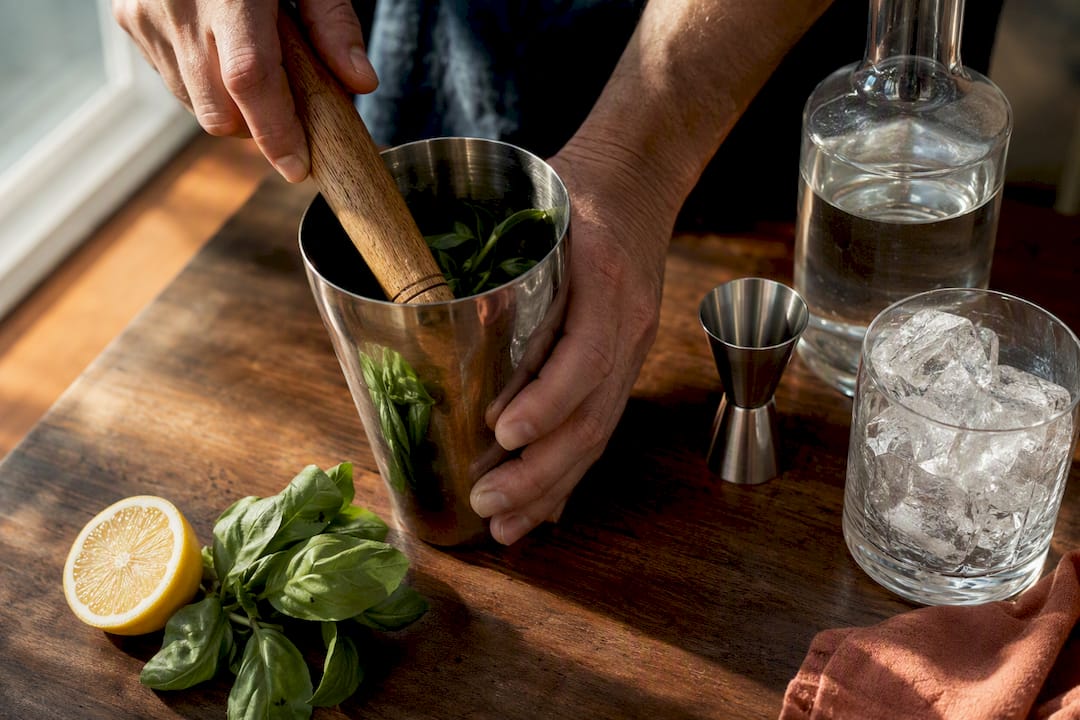
2. Garden G&T. Lightly muddle a small handful of rosemary, thyme and basil sprigs in the base of your glass or shaker, add 2 oz gin, top with tonic and finish with a squeeze of lime. Building it as described in Burrata and Bubbles’ garden gin and tonic keeps the herb flavour bright rather than muddy, because you’re bruising leaves, not pulverising them.
3. Herb-infused gimlet. Make a basil or tarragon syrup at a 1:1 ratio (equal parts sugar and water, herbs steeped 15 to 20 minutes off the heat), then shake gin with fresh lime juice and a measured amount of that syrup. Strain into a chilled coupe. Tarragon’s aniseed note works particularly well against a cleaner, citrus-driven gin.
4. Verdant garden cocktail. Muddle three cucumber slices with a sprig each of mint and dill, add gin and a touch of lime, then shake and strain over ice. A small measure of green Chartreuse dropped in place of some syrup adds herbal depth if you want to push the drink further into savoury territory.
5. Sage-infused short cocktail. Steep a handful of sage leaves in your gin for a day or more in the fridge, tasting along the way to avoid bitterness. Strain out the leaves, then stir the infused gin with a dash of dry vermouth and serve up, the way Table Magazine’s sage-infused gin cocktail recommends.
6. Herbal highball. Build gin over ice in a tall glass, top with soda or tonic, and finish with a rosemary or thyme sprig laid across the rim rather than dropped in. Simple, low-effort, and the sprig does most of the aromatic work every time you lift the glass.
How to pick herbs that actually work with gin
Not every herb suits every gin, and the mismatch is usually a gin problem, not a herb problem. A citrus-leaning or clean botanical gin gives delicate herbs room to shine. A heavily spiced or intensely juniper-forward gin tends to fight softer herbs and can push the whole drink into a savoury, broth-like flavour nobody ordered.
Here’s how the common cocktail herbs behave, and where they sit best:
- Basil — peppery and sweet, pairs beautifully with citrus-forward gin and lemon.
- Mint — bright and cooling, forgiving with almost any gin style.
- Rosemary — resinous and piney, echoes juniper in classic London Dry gins.
- Thyme — earthy and savoury, good in longer drinks like a Garden G&T.
- Sage — savoury with a slightly musky edge, best given time via infusion.
- Tarragon — anise-like, works well against clean, citrus-driven gins.
- Lavender — floral and intense, use sparingly with a lighter-bodied gin.
A quick test before committing a whole bottle: smell the herb, add a drop of gin, then a drop of lemon, and judge whether the three scents sit together or clash. If they clash on your nose, they’ll clash in the glass. Dried herbs work reasonably well for infusions and syrups where cooking time softens them, but avoid dried leaves for muddling: they turn woody and don’t release the same brightness fresh leaves do.
Pro Tip: Keep a small notebook of herb-and-gin pairings that worked and ones that didn’t. Six months in, you’ll have a personal reference far more useful than any recipe list.
The three techniques every herb cocktail relies on
Every recipe above comes back to one of three moves. Master these and you can improvise almost any herb pairing.
- Herb simple syrup. Use a 1:1 sugar-to-water ratio for a lighter syrup, or 2:1 for something richer and more forward. Steep delicate herbs like basil or mint for only 10 to 15 minutes off the heat; woodier herbs like rosemary can go 20 to 30 minutes. Strain through a fine sieve and refrigerate.
- Short gin infusion. For a light aromatic lift, infuse gin with herbs for 2 to 12 hours and taste along the way. For a stronger herbal backbone, as with sage, extend to 24 to 72 hours, tasting from the 24-hour mark so bitterness doesn’t creep in.
- Gentle muddling. Press and twist the herbs against the glass rather than pounding them. Stop the moment you smell the aroma lift; over-muddling releases chlorophyll and bitter compounds nobody wants in their drink.
Strain syrups and infusions properly before serving, and keep herb syrup refrigerated for up to a week. Infused gin keeps longer, but the herb flavour will keep intensifying the longer it sits, so strain it out once it tastes right to you.
Garnish and glassware that make the herb sing
The right glass and garnish do real work here, not just decoration. A coupe suits shaken drinks like the Basil Smash and the herb-infused gimlet. A wine goblet gives a Garden G&T room for its sprigs to breathe. A tall highball is the obvious choice for anything topped with tonic or soda.
- Twist citrus peel over the glass before dropping it in, releasing the oils across the drink’s surface.
- Rest herb sprigs across the rim rather than submerging them, so you smell the herb with every sip.
- A quick flame pass under a rosemary sprig releases smoky oils fast, but hold it well clear of your face and any flammable surface.
- Match tonic to the herb: a citrus tonic lifts basil and mint, while a more classic quinine tonic suits rosemary and thyme.
If you want more ideas on plating and presentation beyond the glass itself, Wild Foodz’s guide to vibrant food presentation is worth a browse for garnish inspiration that translates well to drinkware.
Matching Slim Crop, Dry Cut and Tropical Trim to your herbs
Each of our Denim Collection gins was built with a distinct botanical profile, and that makes some pairings far more natural than others.
- Slim Crop carries cucumber and green notes that make it the obvious choice for the Verdant Garden Cocktail and any cucumber-herb G&T. Mint and dill find a natural echo here rather than a fight.
- Dry Cut leans into a clearer, more classic London Dry structure, which suits the herb-infused gimlet and other citrus-forward serves where you want the botanicals to stay crisp under the herb syrup.
- Tropical Trim brings passionfruit and kiwi to the glass, giving adventurous herb-citrus long drinks a fruit-forward lift that works particularly well against basil or tarragon.
The gins are crafted from natural botanicals with no artificial colouring, which matters when building a drink meant to taste and look genuinely garden-fresh. Browse the full gin cocktail recipes collection for more combinations built specifically around these three gins.
A note on experimenting at home
My favourite discovery was tarragon with lime and Dry Cut. It’s an unlikely match on paper. Small changes matter more than big ones: one extra basil leaf, one more minute of infusion, and the whole drink shifts. Try the recipe hub or the gin match quiz to find your own starting point.
— Winston
Try these recipes with a gin built for herbs
Herbaceous cocktails ask a lot of a gin: it needs enough structure to hold up against fresh herbs without drowning them in juniper or spice. That’s exactly the gap our Denim Collection was built to fill, with natural botanicals and no artificial colouring standing in for the bland, over-engineered spirits that dominate most back bars.
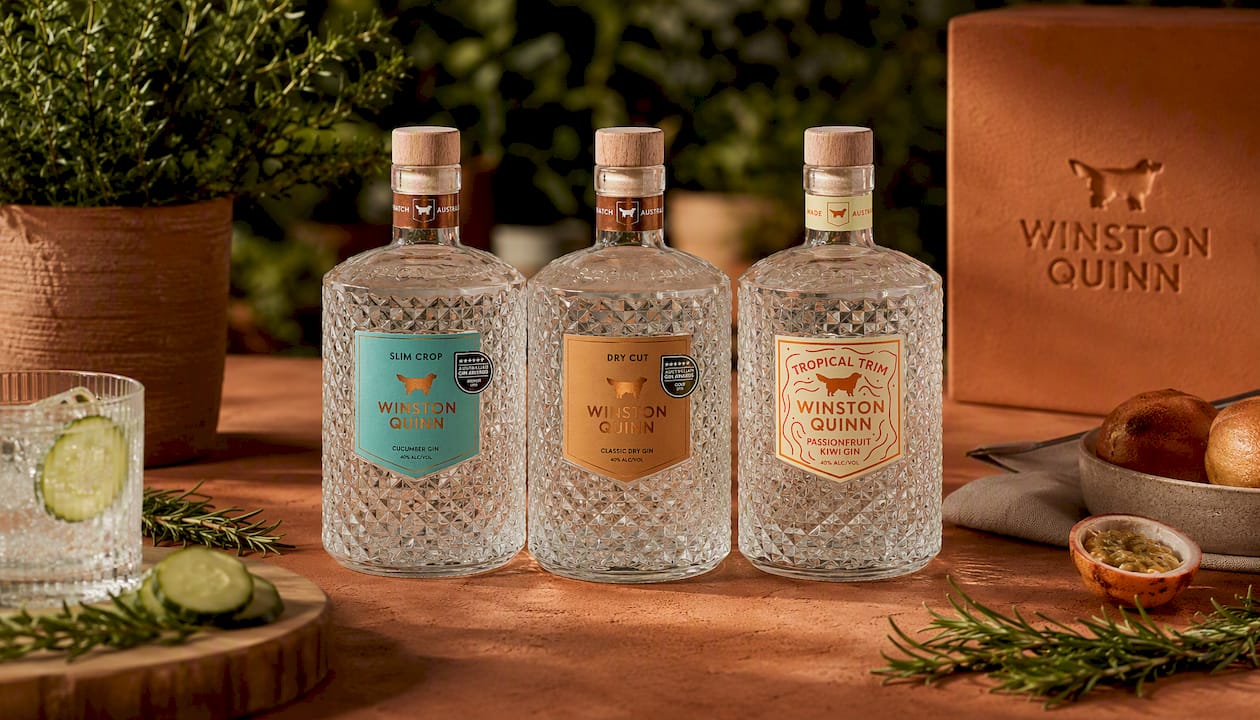
If cucumber and mint are your thing, start with Slim Crop Gin for a properly verdant G&T. If you’re leaning toward a crisper, citrus-forward gimlet, Dry Cut Gin gives the clean botanical backbone those drinks need. For something more adventurous with a fruit-forward lift, Tropical Trim Gin pairs surprisingly well with basil and tarragon. Pick the bottle that matches tonight’s herb bowl and get muddling.
Sources
- Gin Basil Smash (With Fresh Herbs!) - A Couple Cooks
- Garden Gin and Tonic - Burrata and Bubbles
- Sage Advice: A Sage-Infused Gin Cocktail - Table Magazine
FAQ
What are some examples of botanical gin cocktails?
The Gin Basil Smash, Garden G&T, and a rosemary-forward garden cocktail are three well-known examples, each pairing fresh herbs with citrus and gin in different ratios.
What are the top gin cocktails for herb lovers?
The Gin Basil Smash, Garden G&T, herb-infused gimlet, verdant cucumber-herb cocktail, sage-infused short cocktail, and herbal highball each highlight a different herb technique, from muddling to short infusion.
How do I make a gin garden cocktail?
Muddle a small handful of fresh herbs like rosemary, thyme or basil gently in a glass or shaker, add gin, top with tonic or soda, and finish with a citrus squeeze and a fresh sprig garnish.
What are some examples of gin and herb cocktails?
Basil, mint, rosemary, sage and tarragon all pair well with gin. Winston Quinn’s Slim Crop suits cucumber-mint combinations, while Dry Cut works well with tarragon or basil in a citrus-led gimlet.
Do I need special equipment to make herbaceous gin cocktails?
No. A muddler, a shaker or jar, a fine strainer, and a sharp knife for herbs and citrus cover every recipe in this guide.
