


Pure distilled spirits, including gin, vodka, rum, tequila, and whisky, are generally considered gluten-free, along with wine and true hard cider. Most beers are the main exception, unless brewed specifically from gluten-free grains. The real danger zone sits elsewhere: flavoured spirits, liqueurs, canned premixed drinks, and so-called “gluten-removed” beers, plus the everyday risk of cross-contact behind a busy bar.
TL;DR:
- Properly distilled spirits generally stay gluten-free because gluten proteins are not volatile during the process, but additives after distillation can reintroduce gluten.
- Beers brewed from gluten-free grains or labeled as gluten-free, and wines or true hard ciders are safe options, while malt-based or enzyme-treated beers should be avoided.
- Flavoured spirits, liqueurs, premixed drinks, and colored syrups often contain added gluten ingredients or malt components, making them risky for coeliac individuals.
- Cross-contact at bars frequently occurs through shared tools and glassware rather than the bottle itself, so requesting fresh or sealed servings reduces risk.
- Always verify labels and ask producers about post-distillation ingredients, as terms like “processed to remove gluten” or “malt beverage” indicate higher gluten risk.
Table of Contents
- Why distilled spirits are considered gluten-free
- Wine, cider, and beer: the fermented drinks rule
- The hidden risks in flavoured spirits and premixed drinks
- How do I avoid cross-contact at a bar?
- How do I read gluten-free labels correctly?
- Winston Quinn’s approach to gluten-conscious gin
- Balancing strict safety and everyday enjoyment
- Choosing plain distilled spirits from producers transparent about post-distillation ingredients supports a low-risk profile, reflecting the approach behind the Denim Collection.
- Sources
- FAQ
Why distilled spirits are considered gluten-free
Distillation works on a simple principle: heat turns ethanol and the volatile aromatic compounds into vapour, which then condenses back into liquid. Gluten proteins aren’t volatile, so they never make the trip. They stay behind in the still with the other solids, which is why properly distilled spirits typically test at non-detectable gluten levels, a point backed by Coeliac Australia’s dietary guidance and by peer-reviewed distillation science.
That’s the physics. The nuance most guides skip is what happens after distillation:
- Any additive, flavouring, or colouring introduced post-distillation can carry gluten back in.
- Shared production lines and bottling equipment create genuine cross-contact opportunities.
- The base grain, wheat, barley, rye, or corn, stops mattering once distillation is done properly.
Dietitians who work with coeliac patients tend to make the same point: the confusion isn’t about the grain, it’s about what gets added back in afterwards.
Wine, cider, and beer: the fermented drinks rule
Fermentation is a different process to distillation, and it changes the safety calculus considerably. Wine and true hard cider are fruit-fermented, made from grapes or apples, not grain, so they’re naturally gluten-free without any special processing. Beer is the outlier because it’s brewed from malted barley, which contains gluten by definition.
“Gluten-free beer” made from sorghum, millet, or rice sidesteps the problem entirely by never using gluten grains in the first place. “Gluten-removed” beer is a different animal: it starts as ordinary barley beer, then goes through an enzymatic process meant to break down the gluten proteins.
- Safe bet: wine, true hard cider, beers brewed from sorghum, millet, or rice.
- Avoid or verify carefully: standard barley or wheat beer, “gluten-removed” barley beer.
Current testing methods can’t reliably confirm how much intact gluten remains after that enzymatic treatment, which is why the National Celiac Association advises against gluten-removed beers altogether for people with coeliac disease, favouring drinks brewed from gluten-free grains from the start.
The hidden risks in flavoured spirits and premixed drinks
A plain spirit leaving the still is one thing. What happens to it afterwards is where most gluten slip-ups actually occur, and it’s rarely obvious from the front label.
- Check for malt extract or malt syrup in flavoured spirits and liqueurs. Both come from barley.
- Scan canned or bottled ready-to-drink cocktails for “malt beverage” on the label. Many RTDs use a malt base rather than a distilled spirit base.
- Be wary of coloured syrups and pre-made mixers used behind the bar. They’re a common, invisible source of gluten in an otherwise safe drink.
- Ask if a flavoured spirit had anything added after distillation, since that’s the point where gluten can reappear.
Beyond Celiac notes that flavoured spirits and premixed drinks are consistently the biggest blind spot for people who assume “it’s a spirit, so it’s fine.”
Pro Tip: If a flavoured gin, vodka, or liqueur doesn’t list its post-distillation ingredients on the bottle or website, treat it as unverified until the producer confirms otherwise.
How do I avoid cross-contact at a bar?
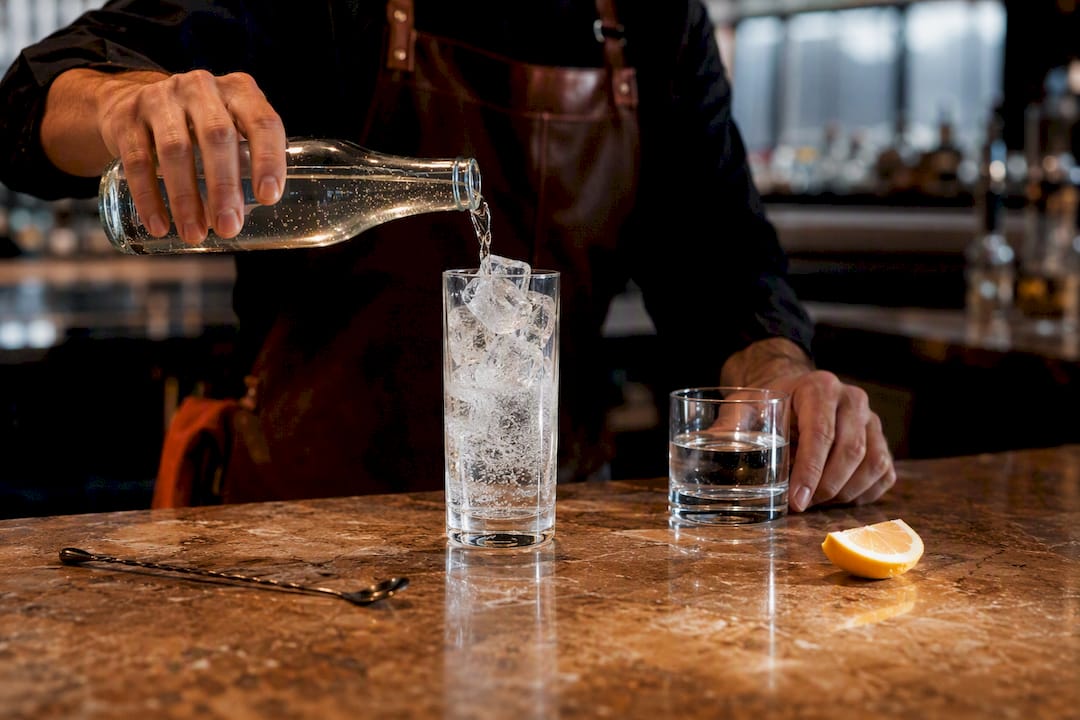
Cross-contact rarely comes from the bottle itself. It comes from the tools around it: a cocktail shaker rinsed but not washed between a beer-based drink and your gin and tonic, a shared strainer, a tap line that’s poured a malt beverage all night. That’s where a genuinely safe spirit becomes a risky drink.
- Ask for a fresh shaker or clean glass, not just a rinsed one.
- Request your spirit neat, on the rocks, or with soda, rather than through a shared cocktail station.
- Where possible, ask to see the sealed bottle poured directly into your glass.
A short script helps: “I need this gluten-free, could I get it poured straight from a sealed bottle with a clean glass, no shared shaker?” Most bar staff will accommodate this without fuss once they understand why you’re asking.
Pro Tip: Simple, single-ingredient orders (spirit plus soda, spirit plus ice) are almost always lower risk than anything requiring a shaker, blender, or premade mix.
How do I read gluten-free labels correctly?
Label language on alcohol doesn’t always match scientific consensus, and that gap causes most of the confusion around this topic. A few terms are worth knowing before you shop:
- “Gluten-free” on a distilled spirit usually just confirms what distillation already achieves. It’s reassuring but rarely necessary for a plain spirit.
- “Processed to remove gluten” applies to beer, not spirits, and signals the enzymatic treatment mentioned earlier, with the testing caveats that come with it.
- “Malt beverage” is a red flag on any canned cocktail or RTD. It means a barley malt base, not a distilled spirit base.
If a spirit’s label is genuinely unclear, the National Celiac Association recommends going straight to the producer. Three quick questions cover most of it: Is anything added after distillation? Is the facility shared with gluten-containing products? Is there a written statement on gluten content you can point to? Regulatory labelling rules vary between countries, so a claim on an imported bottle isn’t automatically valid under your own market’s standards.
Winston Quinn’s approach to gluten-conscious gin
The Denim Collection gins are distilled from natural botanicals, in small batches, with no unlisted additives after distillation. Small-batch runs mean fewer product changeovers and shared lines, which can reduce the opportunity for cross-contact compared to some larger operations.
- Small-batch distillation allows direct control over each production run.
- The ingredient approach is published openly instead of relying only on generic label claims.
- Our assistant distiller Tristan talks through exactly how that production discipline works day to day.
[[author credentials placeholder]] [[relevant industry award or recognition placeholder]] [[customer testimonial placeholder]]
— Winston
Balancing strict safety and everyday enjoyment
If you’re newly diagnosed or have had severe reactions, be strict: stick to plain distilled spirits, verified wine, or certified gluten-free beer, and skip anything flavoured or premixed until you’ve checked it. If your sensitivity is milder, distilled spirits are broadly safe territory, just keep applying the extra checks to flavoured drinks and RTDs. Either way, talk to your treating clinician or dietitian about what fits your specific situation, since alcohol itself can affect gut symptoms independent of gluten content.
Choosing plain distilled spirits from producers transparent about post-distillation ingredients supports a low-risk profile, reflecting the approach behind the Denim Collection.
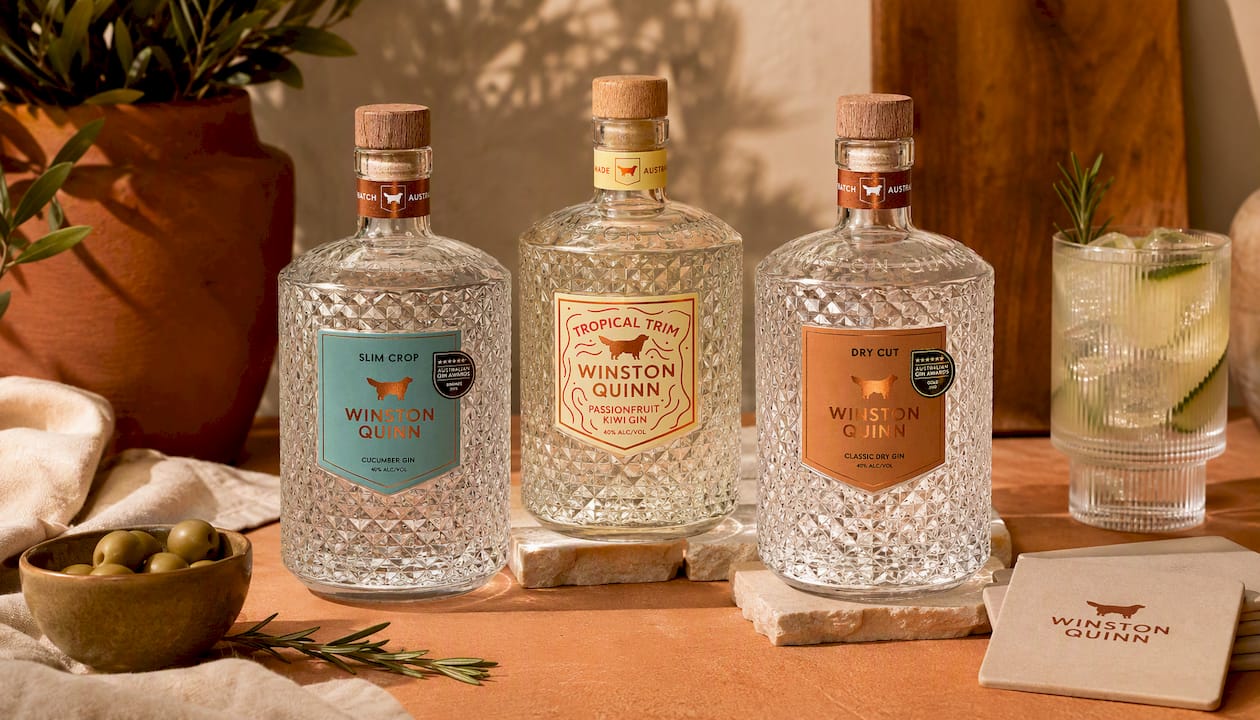
Slim Crop Gin is distilled with cucumber and citrus botanicals and nothing added after the fact that isn’t on the label. Tropical Trim Gin brings a bolder, fruit-forward profile through the same small-batch process. Dry Cut Gin is our take on a classic London Dry, distilled clean with no post-distillation additives to second-guess. If you want ingredient or production detail beyond what’s on the product pages, get in touch with the distillery directly, we’re happy to talk through exactly how each batch is made.
This article is general information, not a substitute for advice from a qualified doctor. Consult a qualified healthcare professional about your own circumstances before acting on anything here.
Sources
- Coeliac Australia — Gluten-free diet guidance (2023 PDF)
- National Celiac Association — Alcohol on the gluten-free diet
- PubMed — representative distillation science article
- Beyond Celiac — Is liquor gluten-free?
FAQ
What alcohol can I drink that is gluten-free?
Pure distilled spirits like gin, vodka, rum, tequila, and whisky are generally gluten-free, along with wine and true hard cider, according to Coeliac Australia. Beers brewed from sorghum, millet, or rice are also safe options.
What alcohol can I drink if I’m gluten intolerant?
The same categories apply: distilled spirits, wine, and true hard cider are the safest starting point. Watch flavoured spirits, liqueurs, and premixed drinks, since additives introduced after distillation can reintroduce gluten.
What alcohol is gluten-free in Australia?
Plain distilled spirits, wine, and true hard cider are considered gluten-free under Coeliac Australia’s guidance, alongside beers made from certified gluten-free grains. Gins like Winston Quinn’s Slim Crop Gin, Dry Cut Gin, and Tropical Trim Gin fit this profile as unflavoured, transparently produced distilled spirits.
What liquors should coeliacs avoid?
Avoid flavoured liqueurs and spirits with malt extract or malt syrup, canned cocktails labelled as “malt beverages,” and any drink where post-distillation ingredients aren’t disclosed. “Gluten-removed” barley beers are also best avoided, since current testing methods can’t reliably confirm their safety.
What should I do if I react after drinking alcohol?
Note exactly what you drank, including any mixers or garnishes, since cross-contact or a hidden malt-based ingredient is the most likely cause rather than the base spirit itself. If reactions persist or feel severe, raise it with your treating clinician rather than guessing at the cause on your own.
