


Aromatic and orange bitters are the most versatile match for gin, working across almost every botanical style you’ll find on a shelf. The one rule worth remembering: match intensity to intensity. A delicate, floral gin wants a light citrus or floral bitters, while a bold, juniper-forward pour like our Dry Cut Gin can carry aromatic or barrel-aged bitters without losing its shape.
TL;DR:
- Aromatic and orange bitters are the most versatile for gin, but intensity matching is crucial to avoid overpowering delicate styles.
- Start with 1 to 3 dashes and taste before increasing, especially when pairing strong, juniper-forward gins like Dry Cut Gin.
- Citrus bitters amplify botanical flavors and brighten lighter gins, while barrel-aged and smoky bitters add weight and complexity.
- Adjust bitters based on the gin’s character: delicate gins need lighter bitters; bold gins can handle more intense options.
- Experiment by adding different bitters to identical gin samples to better understand how each complements specific botanical profiles.
Table of Contents
- What bitters go best with gin?
- How do you choose and dose bitters for your gin?
- Classic gin cocktails and recipes that use bitters
- Which bitters suit each Winston Quinn gin?
- How Winston Quinn develops its pairing notes
- Why the “safe” bitters choice is usually the boring one
- Ready to try these pairings yourself?
- Sources
- FAQ
What bitters go best with gin?
Every bitters category does a different job in a glass of gin, and knowing what each one brings changes how you build a drink rather than just garnish it.
Aromatic bitters are the classic starting point. Warm spice notes (clove, cinnamon, gentian root) add depth without fighting the juniper, which is why a traditional Pink Gin leans on just gin and a few dashes. They work best in stirred, spirit-forward serves where you want backbone rather than lift.
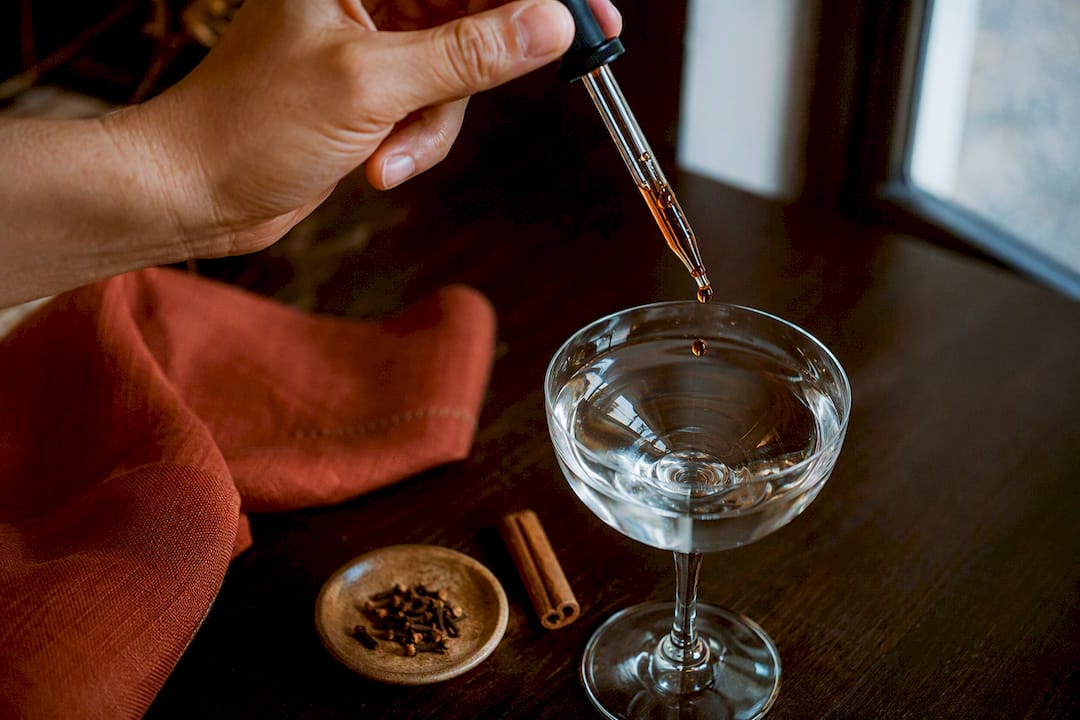
Orange and citrus bitters do the opposite job. Made from dried orange peel, gentian and coriander, they amplify citrus-forward gins and brighten martini-style serves that would otherwise sit a bit flat. Citrus bitters more broadly act as a flavour amplifier, magnifying a gin’s botanicals and cutting through heavier pine notes.
Herbal and botanical bitters amplify the earthy, green side of a gin, think rosemary or thyme leaning into coriander seed or angelica root. Floral bitters like lavender or rose do the reverse, drawing out delicate botanicals in lighter, more perfumed gins without overpowering them. Barrel-aged and smoky bitters add weight, useful when a robust, juniper-heavy gin needs a longer, more savoury finish.
- Start with 1 to 3 dashes and taste before adding more.
- Aromatic and orange bitters cover most gin styles reliably.
- Herbal, floral and barrel-aged bitters are for fine-tuning a specific gin’s character, not an everyday default.
How do you choose and dose bitters for your gin?
Picking the right bitters is less guesswork than most people assume, provided you work through it in order rather than reaching for whatever’s on the shelf.
- Identify your gin style. Is it dry and juniper-forward, citrus-led, floral, or built around unusual modern botanicals?
- Decide the goal. Are you trying to brighten a serve, balance sweetness from a tonic or vermouth, or deepen a savoury, stirred drink?
- Match intensity. Delicate gins need light bitters (floral or a gentle citrus); robust, juniper-heavy gins can handle aromatic or barrel-aged bitters without being flattened.
- Dose in stages. Start with a single dash, taste, then build. Short serves like a gin and tonic usually settle at 2 to 3 dashes; stirred cocktails that need backbone can take 3 to 4.
- Run a side-by-side test. Pour two small samples of the same gin, add a different bitters to each, and compare directly rather than relying on memory.
Pro Tip: Taste in three stages: the first sniff (aroma), the mid-palate hit (what the bitters actually adds), and the finish (how it changes the drink’s length and dryness). Most people only ever judge the first one.
Watch for the common mistakes: over-bittering a delicate gin, stacking citrus bitters onto an already citrus-forward gin until it turns sour, or dropping heavily spiced bitters into a light, floral serve where they drown everything else. Starting small and tasting as you go, a method bartenders rely on professionally, avoids nearly all of it.
Classic gin cocktails and recipes that use bitters
Nothing teaches pairing faster than making the drink. These four serves show how the same base spirit changes character depending on which bitters you reach for.
- Pink Gin. Pour gin over ice, add 1 to 3 dashes of aromatic bitters (Angostura is the textbook choice), stir briefly, and garnish with a twist of lemon peel. It’s the simplest way to taste what aromatic bitters actually do to gin on their own.
- Negroni-style serve. Equal parts gin, sweet vermouth and Campari, stirred over ice. Add a dash of orange bitters if you want more citrus lift, or a barrel-aged bitters if you’d rather deepen the bitterness and round off the finish.
- Gin and tonic with bitters. Build over ice, top with tonic, and finish with 2 dashes of orange or citrus bitters. Garnish with grapefruit peel or a sprig of rosemary. Gin-focused sampler sets, often built around rosemary, grapefruit and thyme bitters, are a low-risk way to test a few options in one sitting without buying full bottles.
- Gin sour. Shake gin, lemon juice and simple syrup hard with ice, then finish with 2 dashes of aromatic or barrel-aged bitters floated on top. Swap egg white for aquafaba if you want a vegan version, the texture holds up almost identically.
Shaken drinks with citrus need a hard shake and fine strain for a silky texture; stirred drinks like Pink Gin or a Negroni variant want a slow stir and a rocks glass to keep the aromatics intact rather than diluted.
Which bitters suit each Winston Quinn gin?
Pairing works best when you start from the gin’s own character rather than whatever bitters happens to be open on the bench. Here’s how three Denim Collection gins line up.
- Tropical Trim Gin brings fruit-forward, warmer botanicals. Floral or citrus bitters echo that character in a tall serve, and it’s the base spirit behind our tropical trim mango daiquiri for anyone wanting a fruitier starting point.
If you’ve only got one bottle of bitters at home, an aromatic bitters is the safest all-rounder across all three, just dose lighter with Slim Crop and Tropical Trimmer than you would with Dry Cut. The logic in every case comes down to acidity balance and aromatic lift working with the gin’s own botanicals, not against them.
How Winston Quinn develops its pairing notes
Every pairing suggestion above comes from how we build our gins in the first place. Each release in The Denim Collection starts with locally sourced botanicals, distilled by hand rather than blended from a formula, which is part of why Slim Crop, Tropical Trim and Dry Cut each carry such distinct personalities in a glass. Tasting sessions during development shape which bitters we’d reach for ourselves, and that same thinking runs through the recipes we share publicly.
Why the “safe” bitters choice is usually the boring one
Most guides tell you to reach for aromatic bitters and stop there, and while that’s a fine default, it undersells what gin can do. The most interesting pairing I’ve come across wasn’t a considered decision at all. It was a barrel-aged bitters dropped into a citrus-forward serve almost by accident, and it turned a flat gin and tonic into something with real length on the finish.
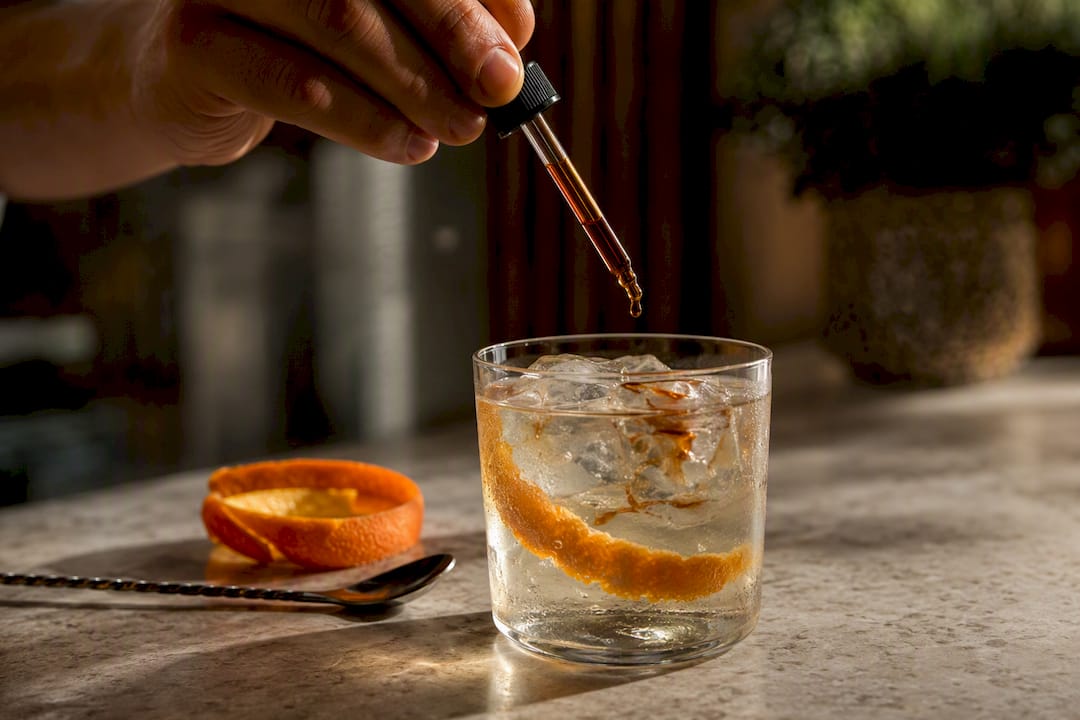
That’s the case for experimenting rather than settling on one bottle of bitters and calling it done. Gin rewards curiosity more than most spirits because its botanical mix gives bitters so much to interact with, floral notes, citrus peel, juniper, root spice, all sitting there waiting for something to pull them forward or hold them back.
Try this tonight: pour two identical measures of the same gin, add a different bitters to each, and write down what changes in the aroma, the middle of the sip, and the finish. Ten minutes, two glasses, and you’ll know more about pairing than any list of rules can teach you. Then go build the Pink Gin or one of the other recipes with what you’ve learnt.
— Winston
Ready to try these pairings yourself?
Some gins are built from all-natural, locally sourced botanicals with no artificial additives, which means bitters interact with real, distinct flavour rather than a flat neutral base. That’s what makes them a genuinely useful starting point for the pairings above, whether you’re chasing the fresh green edge of Slim Crop Gin, the fruit-forward warmth of Tropical Trim Gin, or the bold juniper backbone of Dry Cut Gin.
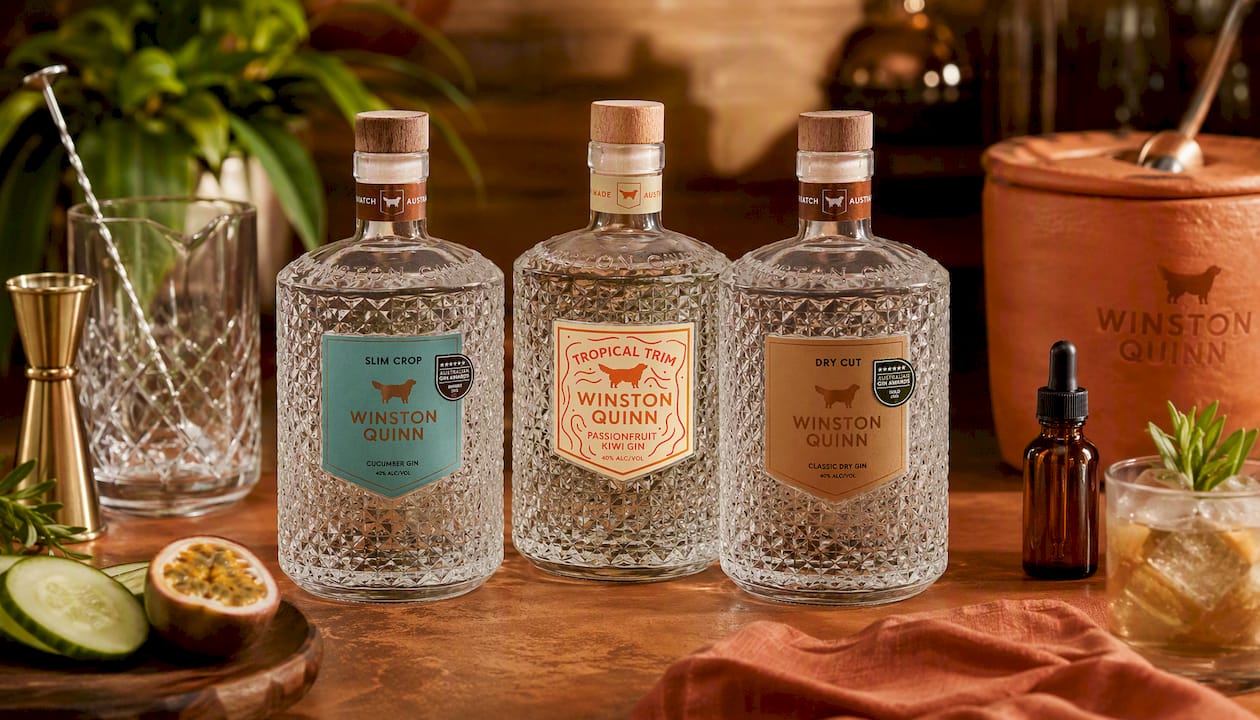
If you’re stocking a home bar for the first time, browse the full Gins collection or take a look at The Denim Collection to compare all three side by side. Pick up a bottle of tonics while you’re there if a gin and tonic is your first test, or check the merch collection for something to bring to the next tasting session. Order now and you could be running your first side-by-side comparison this weekend.
Sources
- All you need to know about cocktail bitters — Australian Bartender
- House-made orange bitters — Sugar House
- Gin & Tonic - SEIERS - Scandinavian Craft Bitters
- Angostura Aromatic Bitters — Difford’s Shop
FAQ
What bitters go best with gin?
Aromatic bitters and orange or citrus bitters are the most reliable all-rounders, since they complement juniper without clashing with a gin’s other botanicals. For a bolder, juniper-forward pour like Dry Cut Gin, aromatic or barrel-aged bitters tend to work best.
What are examples of bitters?
Common examples include aromatic bitters (Angostura is the most widely recognised), orange bitters, citrus bitters, herbal or botanical bitters, floral bitters like lavender or rose, and barrel-aged or smoky bitters. Each targets a different part of a gin’s flavour, from warming spice through to bright citrus lift.
Do lemon lime bitters go with gin?
Lemon lime bitters can work in a tall gin serve, particularly with a citrus-forward or floral gin such as Slim Crop Gin, but they’re sweeter and less complex than dedicated cocktail bitters. Start with one dash in a gin and tonic and taste before adding more, since the sweetness builds faster than with a true cocktail bitters.
Can I use Angostura bitters in a gin and tonic cocktail?
Yes, Angostura bitters work well in a gin and tonic, adding warm spice depth to balance the tonic’s sweetness. Two dashes is a good starting point, in line with the 1 to 3 dash range recommended for a traditional Pink Gin, then adjust to taste.
