


Choose a garnish that reinforces or complements your gin’s botanicals, not one that fights them. Reach for classic staples like lemon, lime, grapefruit, cucumber or juniper when you’re unsure, and expand from there once you know your gin’s flavour direction. This guide walks through classic and creative gin garnishes, a simple method for matching them to any bottle, proper technique, and what to serve alongside your G&T.
TL;DR:
- Classic citrus peels, especially lemon and lime, are versatile garnishes that enhance specific gin styles like juniper-forward or citrus-heavy gins.
- Unusual garnishes such as edible flowers, lemon myrtle, or spices like star anise should be used sparingly to avoid overpowering the gin’s botanicals.
- Proper technique in expressing citrus oils and handling herbs significantly boosts a garnish’s aromatic impact and overall drink presentation.
- Matching garnishes to a gin’s primary botanicals, such as floral with elderflower gins or spicy with pink peppercorns, ensures the drink’s aroma and flavor are harmonized.
- Using the correct glass and thoughtful placement of garnishes, like oil-side citrus peels on the rim, maximizes aromatic release and drink enjoyment.
Table of Contents
- Choosing gin and tonic garnishes: the classic starting point
- Creative gin garnishes worth experimenting with
- How to match a garnish to your gin, step by step
- Getting the technique right: expressing oils and handling herbs
- What food goes with gin and tonic
- Winstonquinn’s garnish picks for Slim Crop, Pink Fit and Tropical Trim
- Serving it right: glass, placement and presentation
- Seasonal garnish ideas for every occasion
- Editor’s perspective: build a garnish habit, not a garnish rule book
- Where to find the gins behind these garnish pairings
- Sources
- FAQ
Choosing gin and tonic garnishes: the classic starting point
Classic garnishes earn their reputation because they work with almost any gin, and they’re the fastest way to lift a drink when you haven’t got time to overthink it. Citrus is the backbone of most gin garnishes for good reason: the peel carries the aromatic oils that shape how a gin smells before you even taste it.
Lemon peel suits crisp, juniper-forward London Dry styles, while lime works better with gins that lean citrus-heavy themselves, sharpening rather than duplicating that character. Orange peel brings warmth and rounds out spiced or barrel-aged gins, and grapefruit, especially pink grapefruit, flatters gins with a floral or slightly bitter edge. The choice between peel, wheel or slice matters more than people think. A peel, expressed properly, delivers concentrated aroma with minimal visual fuss. A wheel or slice looks generous in the glass but releases oils more slowly and dilutes as it sits, which can blur a gin’s cleaner notes over time.
Cucumber ribbon is the obvious match for London Dry gins built around cucumber or heavily floral botanicals. It cools the palate and plays well with soft, green flavours rather than competing with them.
A few juniper berries, lightly crushed, reinforce the gin’s own base spirit character, since juniper is one of the most popular garnish choices alongside citrus and herbs. Mint suits herbaceous gins with a green, leafy profile, while rosemary adds a piney, savoury note that flatters gins already built around woody botanicals.
- Lemon peel: London Dry, classic juniper-led gins
- Lime wheel: citrus-forward or tropical gins
- Grapefruit peel: floral or delicately bitter gins
- Cucumber ribbon: cucumber or floral gins
- Juniper berries, lightly crushed: traditional, juniper-heavy gins
- Rosemary sprig: herbaceous or woody gins
Pairing citrus with a single herb, say lemon peel with a small rosemary sprig, often lifts aroma more than either garnish does alone. That combination gives you a fragrant top note and a deeper, savoury undertone without cluttering the glass.
Creative gin garnishes worth experimenting with
Once you’ve got the classics down, unusual gin garnishes are where a home bar starts to feel genuinely personal. The trick is restraint. Most of these ingredients are stronger than citrus, so a little goes further than you’d expect.
Lavender and edible flowers such as rose petals or violets work best with gins already carrying floral botanicals like elderflower or rose. Float a single small flower or a pinch of dried lavender near the surface rather than dropping in a handful. Too much and you’ll taste soap rather than perfume. On its own, plain rose water or a rose petal offers more aroma than actual flavour, so treat it as a nose-first garnish.
Lemon myrtle is a distinctly Australian option worth keeping in the fruit bowl. Native to Queensland’s coastal rainforests, it delivers a citrus hit that’s sharper and more floral than lemon peel, and it’s a fitting substitute in gins built around native or Australian botanicals. Home bartenders are encouraged to experiment based on a gin’s base flavour, and lemon myrtle is a straightforward way to do that with something local rather than imported.
Spices reward a light hand. Pink peppercorns, star anise and cardamom pods can add real aroma and mild flavour, but they need light dosing to avoid overpowering the gin. One or two pink peppercorns, lightly crushed, suit gins with a peppery or spiced profile. A single star anise point works with warmer, more aromatic gins. Cardamom, cracked rather than whole, flatters gins with a citrus and spice combination.
- Lavender or rose petal: floral, elderflower-based gins
- Lemon myrtle: native or Australian botanical gins
- Pink peppercorn (1 to 2, crushed): peppery or spiced gins
- Star anise (single point): warm, aromatic gins
- Thin apple slice: crisp, green-apple style gins
- Rhubarb ribbon: tart, fruity gins
- Cherry tomato half: savoury, herbaceous gins
Vegetable and fruit garnishes are less common but worth trying. A thin apple slice suits gins with a crisp green-apple character, while a rhubarb ribbon brings tartness that complements fruity or berry-forward gins. A cherry tomato half sounds odd until you try it with a savoury, herb-heavy gin, where its acidity cuts through the tonic’s sweetness nicely.
How to match a garnish to your gin, step by step
Every good garnish choice starts with reading the bottle. Check the label or the distiller’s tasting notes for the primary botanicals listed, usually two or three that define the gin’s character beyond juniper.
Once you know those botanicals, map them onto a rough garnish category: citrus, floral, herb, spice or fruit. This is essentially a garnish flavour wheel approach, and it works because a garnish should echo and amplify the gin’s own botanicals rather than mask them.
Some concrete pairings that follow this logic:
- A floral gin (elderflower, rose, violet) pairs naturally with lavender, rose petal or a small edible flower.
- A spiced gin (cardamom, cinnamon, pepper) suits pink peppercorn, a cinnamon stick or star anise.
- A citrus-forward gin pairs with a matching or contrasting peel, lime for a lemon-heavy gin, grapefruit for an orange-heavy one.
- A cucumber or green gin wants cucumber ribbon or a light herb like mint.
- A juniper-dominant classic gin does well with juniper berries and a simple lemon twist.
Matching isn’t always about harmony, though. Sometimes a deliberate contrast sharpens a drink more than an echo does, pairing a sweeter, fruit-forward gin with something sharp like grapefruit peel to cut the sweetness rather than add to it. The safest rule for beginners is to stick to two garnishes at most. Adding more than two tends to clutter the aroma and visually crowd the glass, which works against the whole point of garnishing in the first place.
Getting the technique right: expressing oils and handling herbs
Technique separates a garnish that actually changes the drink from one that just sits there looking decorative. Citrus peels carry most of a fruit’s aromatic oils, and expressing that peel properly releases oils that meaningfully change the drink’s aroma.
- Use a vegetable peeler or channel knife to cut a strip of peel roughly 2 to 3cm long and 1cm wide, avoiding as much white pith as possible.
- Hold the peel skin-side down about 4 to 5cm above the glass.
- Pinch firmly to spray the oils across the surface of the drink.
- Optionally rub the peel around the rim before dropping it in.
This is why peel consistently outperforms a wheel or slice for aroma: a wheel floats and drips juice, but a peel is engineered to release oil in one deliberate motion.
Herbs need a gentler touch. Slap rosemary or mint once between your palms to release volatile oils, and avoid over-handling, which bruises the leaves and turns the aroma vegetal and bitter. Skip mint altogether with a heavily juniper-forward gin, as the two green, piney notes can clash rather than complement each other. For berries and pods, crush one or two juniper berries or peppercorns with the back of a spoon rather than a mortar and pestle. You want a crack, not a powder.
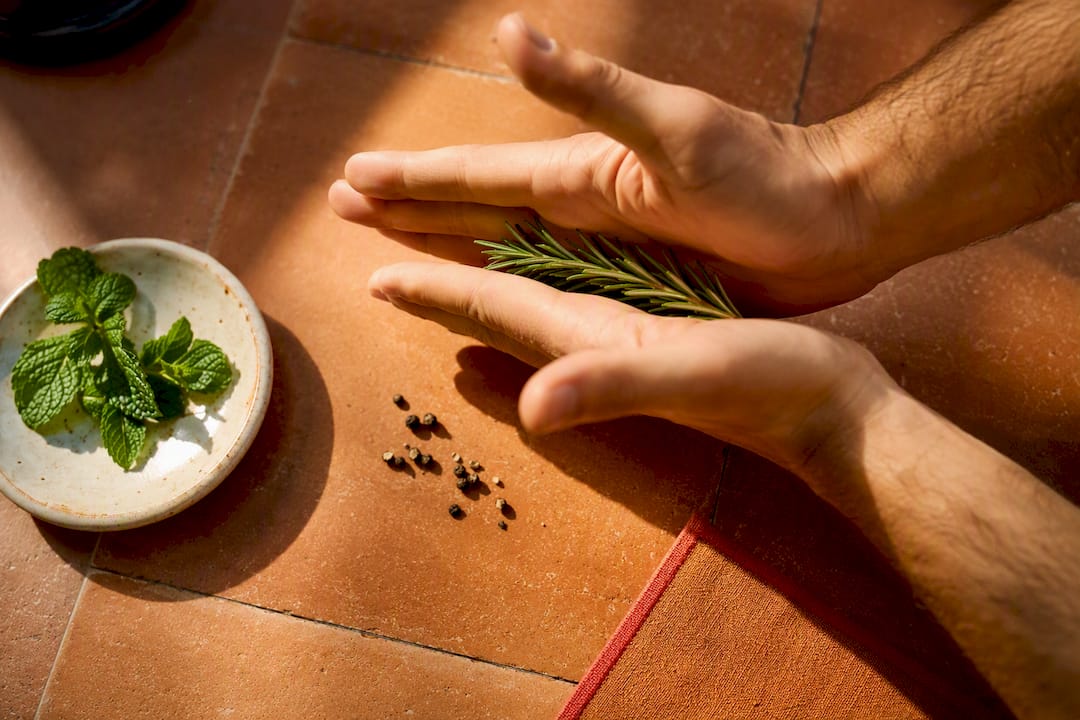
Dried herbs, more than two garnishes at once, and maraschino cherries are the three most common mistakes. Dried herbs lack the volatile oils fresh ones carry, so they add texture without aroma.
Pro Tip: Keep a Y-peeler, a small channel knife, and a microplane in a drawer near your gin. Those three tools cover almost every citrus and spice garnish you’ll ever need.
What food goes with gin and tonic
Food pairing with gin works on the same logic as garnishing: match or contrast the botanicals. Seafood and citrus-laced garnishes commonly pair well with gin, which makes prawns, oysters or smoked salmon a natural fit for a citrus- or cucumber-garnished G&T.
Pickles and salty snacks complement herbaceous or peppery gins especially well, since the salt and acidity balance the gin’s savoury edge. A good gin and cheese pairing leans on the same fat-acid balance: a sharp, aged cheddar cuts through a juniper-heavy gin, while a soft, creamy goat’s cheese suits floral or citrus styles.
- Oysters or prawns: citrus or cucumber-garnished gins
- Pickled vegetables or olives: herbaceous or peppery gins
- Aged cheddar: classic, juniper-forward gins
- Soft goat’s cheese: floral or citrus-forward gins
Keep snacks simple enough that they don’t fight your garnish for attention. A well-presented small platter also does a lot of visual work without needing anything elaborate.
Winstonquinn’s garnish picks for Slim Crop, Pink Fit and Tropical Trim
Every gin can be considered to have its own set of natural botanicals, so garnish suggestions should follow the same matching logic laid out above. For Slim Crop Gin, a crisp green-apple and cucumber garnish echoes its clean, light profile. Pink Fit Gin leans fruity and floral, so a strawberry slice or rose petal suits it well. Tropical Trim Gin calls for passionfruit or kiwi to match its tropical botanicals. Browse our full cocktail recipe collection for exact serves.
Serving it right: glass, placement and presentation
The right glass changes how much you even taste a garnish’s aroma. A copa or balloon glass, with its wide bowl narrowing at the rim, concentrates aromatics near your nose as you drink, which is exactly why it’s become the standard for gin and tonic in most bars. A standard highball works fine too, but it loses some of that aromatic concentration simply because there’s more open air between the liquid and your face.
Placement matters almost as much as the garnish itself. A citrus peel should sit on the surface or rim, oil-side facing you, so every sip carries a hit of aroma before the liquid reaches your mouth. Herbs work best tucked against the rim rather than floating in the centre, where they can end up drifting into your mouth mid-sip. Berries and spices are better dropped to the bottom or middle of the glass, out of the way but still visible through the ice.
Build the drink in the right order: ice first, filled to the top of the glass, then gin, then garnish, then tonic poured slowly down the side. This sequence stops the garnish from bruising against ice cubes and keeps the tonic’s carbonation from disappearing into a wall of foam. A few large ice cubes melt slower than crushed ice, which matters more than people realise. Slower melting means less dilution, so your garnish’s aroma stays distinct instead of getting washed out over ten minutes of sipping.
Seasonal garnish ideas for every occasion
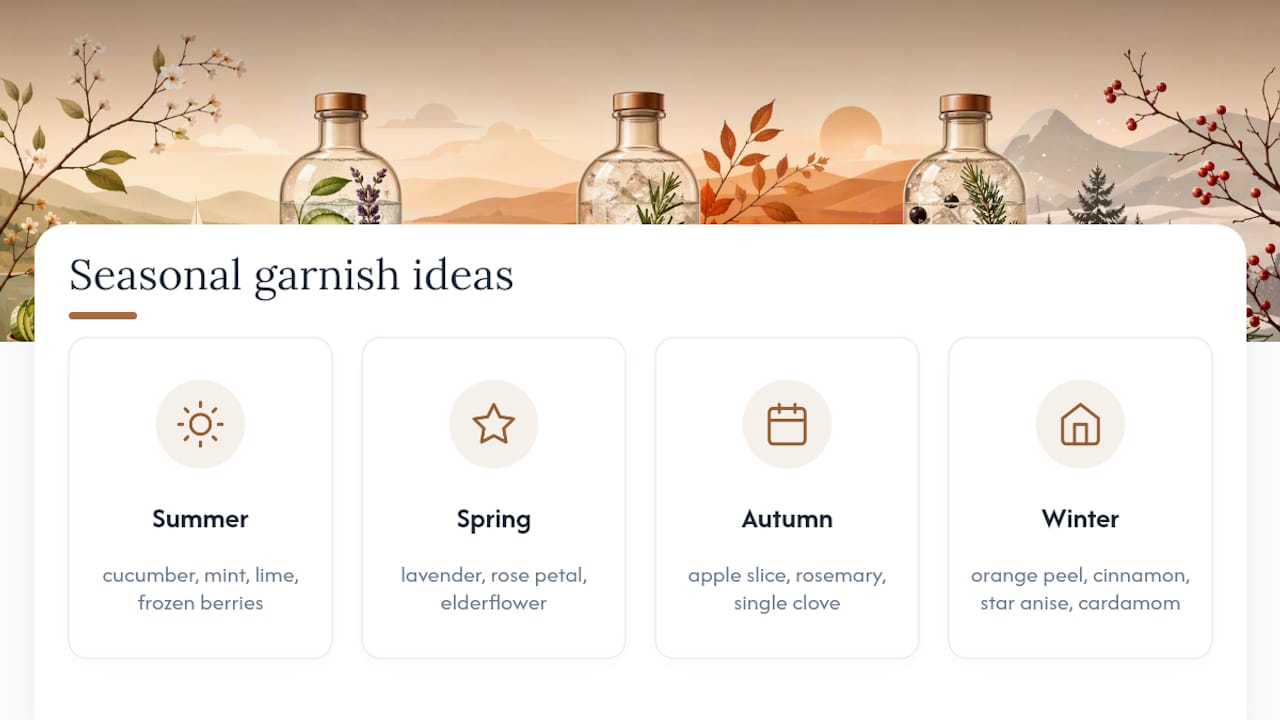
Garnishing changes with the weather, and matching a serve to the season is an easy way to keep your G&T feeling fresh year-round. In summer, lean into bright, cooling choices: cucumber ribbon, mint, lime wheel or a few frozen berries dropped straight into the glass to double as ice. These garnishes suit long, hot afternoons and outdoor gatherings where a lighter, more refreshing profile wins out.
Cooler months call for warmer, spicier garnishes. Orange peel, a cinnamon stick, star anise or a couple of cracked cardamom pods bring a cosy, aromatic depth that suits an evening indoors. These pair particularly well with gins that carry their own spiced or citrus-warm botanicals.
Spring favours florals: lavender, rose petal or elderflower-adjacent garnishes match the season’s lighter, more delicate mood. Autumn sits somewhere between the two extremes, apple slice, rosemary or a light spice like a single clove work well as the weather starts to turn.
Occasions matter too, not just temperature. A festive gathering suits a more decorative garnish, a small edible flower or a dusting of dried citrus wheel, while a casual weeknight G&T is better served by something quick and classic like a lemon peel. Dried citrus wheels, dehydrated in an oven or dehydrator, last for weeks and make a handy garnish to have on hand for entertaining without needing fresh fruit on short notice.
Editor’s perspective: build a garnish habit, not a garnish rule book
A garnish shapes a drink’s aroma more than most mixers ever will. Keep a small notebook of what you tried and liked. Try one new pairing a week, and don’t be afraid to share what works.
— Winston
Where to find the gins behind these garnish pairings
If you’ve read this far, you’re probably itching to try a few of these combinations yourself, and the easiest way to start is with a gin whose botanicals are already clearly defined. We build every bottle in the Denim Collection around natural, locally sourced botanicals with no artificial colouring, so the flavour profile you read on the label is genuinely the flavour profile in the glass, which makes the matching method in this guide far easier to apply than it is with a bottle that hides its botanicals behind vague marketing copy.
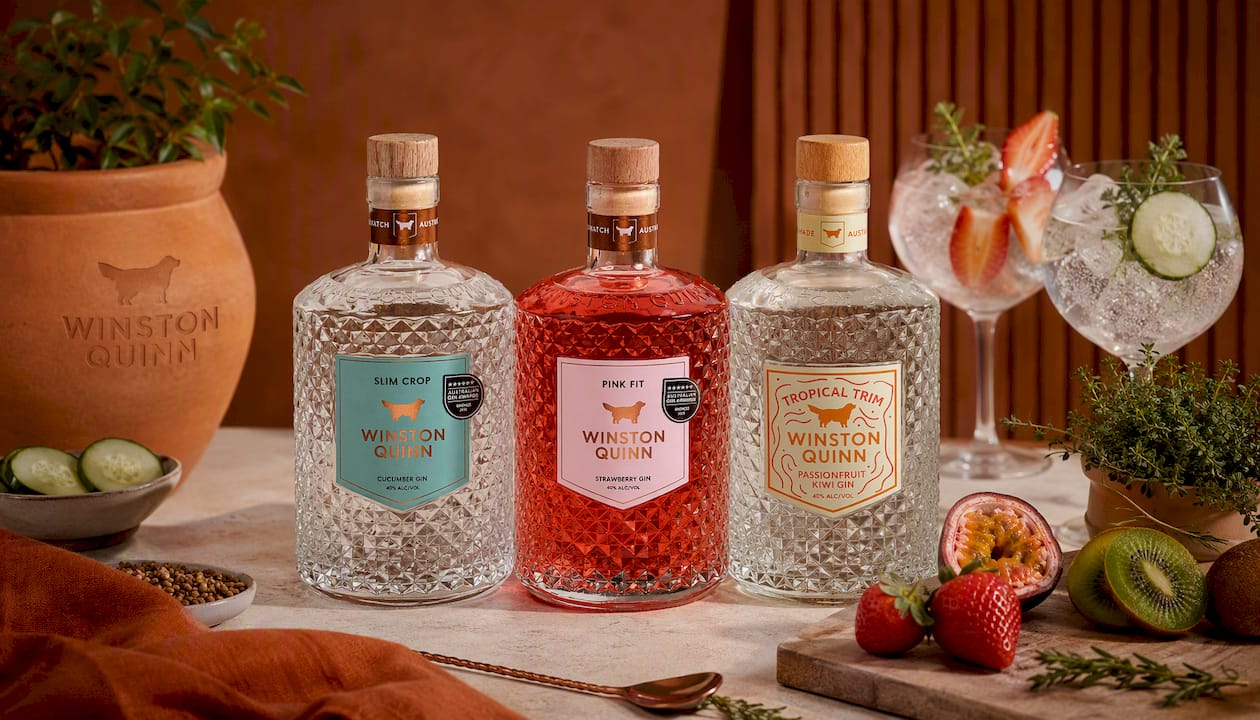
Start with Slim Crop Gin and a cucumber ribbon or thin green apple slice. Move to Pink Fit Gin with strawberry or rose petal, and try Tropical Trim Gin with passionfruit or kiwi. Pair any of the three with a bottle from our tonic collection to round out the serve, and check the recipe pages for exact measures if you’d rather follow a build than guess. Browse the full gin range to find the botanical profile that suits your garnish plans, or take a look at our limited editions if you want something less common to experiment with.
Sources
- How to Garnish a Gin Cocktail: Beyond the Lime Wheel | Gincave
- Best food to pair with gin | Tasting Table
- Practical garnish technique guidance
- Ultimate gin garnish guide | The Curious Drinker
FAQ
What are some good herb garnishes for gin and tonic?
Rosemary and mint are the most reliable herb choices, with rosemary suiting woody or spiced gins and mint suiting herbaceous, green-leaning ones. Give either a single sharp slap between your palms before adding it, which releases aroma without bruising the leaf.
Which garnish is most commonly used for a gin and tonic?
Lemon or lime peel is the most common choice, largely because citrus, herbs and juniper berries are the most popular garnishes overall. Peel is generally preferred over a wheel or slice because it expresses concentrated oil rather than diluting the drink.
How do you fancy up a gin and tonic?
Add one unusual element to a classic base, such as a pink peppercorn with your lemon peel, or a lavender sprig alongside your grapefruit. Use no more than two garnishes to keep the aroma focused and maintain a clean presentation.
What nibbles go with gin and tonic?
Seafood like oysters or prawns suits citrus and cucumber-garnished G&Ts, while pickles and salty snacks work better alongside herbaceous or peppery gins. A sharp cheddar or a soft goat’s cheese both make solid gin and cheese pairings, depending on whether your gin leans juniper-heavy or floral.
How much does Winstonquinn gin cost?
Current pricing for Slim Crop, Pink Fit, Tropical Trim and the rest of the range is listed on the Winstonquinn gin collection page.
