


Pink gin means two things: the classic Royal Navy cocktail of gin cut with Angostura bitters, and the contemporary style of gin infused with red fruit like strawberries or raspberries for a naturally pink hue. One is bitter and bracing; the other is soft, fruity, and built for easy drinking. Both are worth understanding before you order or buy, because the name alone won’t tell you which glass is coming your way.
TL;DR:
- The classic pink gin is made by adding Angostura bitters to gin at serving, resulting in a dry, aromatic, and bitter drink with no artificial coloring.
- Modern pink gins are pre-flavored spirits infused with real fruits like strawberries and raspberries, often with added sugar and artificial colorings.
- Bottle labels should specify if the pink gin is naturally infused or simply flavored, and checking ingredients helps avoid added sugars or artificial dyes.
- The taste differences are substantial: the classic version is juniper-forward and bitter, while the modern spirit is sweet, fruit-heavy, and softer on juniper.
- For genuine fruit flavor, choose brands like Pink Fit Gin that emphasize natural infusion and real botanical ingredients.
Table of Contents
- Where pink gin comes from: history and origins
- Why “pink gin” now means two different drinks
- How pink gin is actually made
- What pink gin tastes like
- How to serve pink gin: classic and modern recipes
- Pink gin vs regular gin: the real differences
- What Winston Quinn’s approach to pink gin looks like
- Classic or modern: which pink gin should you order?
- Try Pink Fit if fruit-forward pink gin is what you’re after
- Sources
- FAQ
Where pink gin comes from: history and origins
The story starts with the Royal Navy in the 1820s, not a marketing department. Sailors used Angostura bitters as a stomach remedy, and the aromatic tincture was harsh enough on its own that someone thought to cut it with gin. The classic proportions were simple: usually about a couple of ounces of gin against a few dashes of Angostura, stirred rather than shaken, and served at room temperature with no ice.
That last detail surprises most people today. Refrigeration wasn’t standard aboard ship, so the drink was built to be strong and undiluted, letting the bitters do the talking. Over time it drifted from wardroom habit into civilian bars, and the name stuck because of a simple visual fact:
- Angostura bitters stain the gin a faint rosy colour on contact
- That blush is what earned the drink its name, long before pink became a marketing colour
- The recipe travelled from Navy messes into British gentlemen’s clubs by the late 1800s, cementing it as a proper cocktail rather than a shipboard fix
Why “pink gin” now means two different drinks
Ask for a pink gin today and you might get a dry, bitters-laced cocktail, or you might get a glass of fruit-infused spirit that’s sweet enough to sip on its own. Both are legitimate uses of the name, and the confusion is real, even among people behind the bar.
The classic version is a preparation, not a product; it’s built at the point of serving from ordinary gin and a splash of bitters. The modern version is a bottled spirit, already pink before it ever touches a mixer, usually flavoured with:
- Strawberry
- Raspberry
- Rhubarb
- Redcurrant
Difford’s Guide notes that this modern category grew out of consumers wanting a more approachable, fruit-forward gin, softer on juniper than a traditional London Dry. Industry dictionaries covering spirits terminology point out that the two drinks taste nothing alike, which is exactly why the mix-up matters.
Pro Tip: If you’re ordering at a bar, say “the Angostura pink gin” for the classic cocktail, or name the brand of pink spirit you want. That one phrase avoids getting a drink you weren’t expecting.
How pink gin is actually made
Making the classic cocktail takes seconds: dash bitters into a glass, add gin, done. Making a bottled pink gin spirit is a different process altogether, and it’s where label-reading pays off.
Most reputable producers use post-distillation infusion. The base spirit is distilled as an ordinary gin first, then rested with real fruit and complementary botanicals so the colour and flavour steep in naturally, much like brewing a strong tea. Difford’s Guide documents this as the standard approach across the category, using fruits like raspberry, strawberry, rhubarb, and redcurrant either alone or blended.
Not every bottle gets there the same way, though. Some producers add sweeteners to round out tartness, and some lean on artificial colouring rather than genuine fruit to guarantee a consistent shade batch after batch, a shortcut worth knowing about before you buy, as Tasting Table has pointed out. A few things worth checking on the label:
- Does it say “infused with natural botanicals” or simply “flavoured”?
- Is sugar or a sweetener listed in the ingredients, and where does it sit on the list?
- Does the colour come from the fruit itself, or from an added colouring agent?
- Is there an added sugar disclosure, useful if you’re watching calories in your mixer choice?
What pink gin tastes like
The two styles don’t just look different; they taste like different drinks entirely.
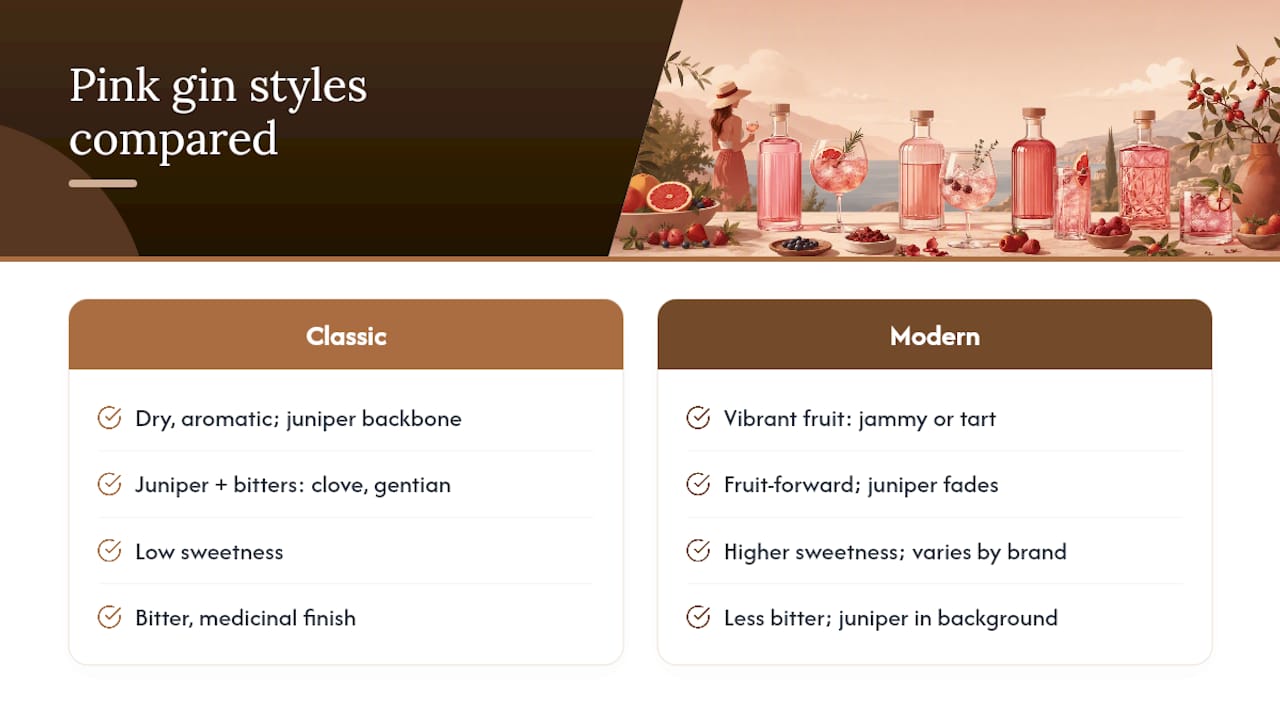
The classic cocktail leans dry and aromatic. Juniper still carries the backbone, and the bitters bring clove, gentian, and a bitter, almost medicinal edge that lingers on the finish. It’s not a crowd-pleaser in the way a fruity spirit is, and it isn’t meant to be.
The modern spirit flips that balance, offering vibrant fruit notes that can inspire cocktail and food pairings as highlighted in vibrant food presentations examples. Sweetness moves to the front, with jammy or tart fruit notes doing most of the work and juniper fading into the background. Beefeater’s own product notes describe this shift as deliberate, aimed at drinkers who find heavier juniper profiles less approachable. Sweetness varies noticeably by brand though, so two “pink gins” side by side can taste quite different.
For mixers: pair the bitters-forward cocktail with a splash of water or serve it neat, since tonic tends to fight the bitterness. The fruit-forward spirit works well with tonic, lemonade, or a dry prosecco, which lets the fruit shine without turning the drink cloying.
How to serve pink gin: classic and modern recipes
Once you know which pink gin you’re working with, serving it properly is straightforward.
- Classic pink gin cocktail: Chill a rocks glass, add one to three dashes of Angostura bitters and swirl to coat, then pour in a couple of ounces of gin. A splash of water is optional, and historically there was no ice at all, so expect a stronger, more concentrated drink than most modern cocktails.
- Pink gin and tonic: Pour around one and a half to two ounces of a fruit-infused pink gin over ice, top with tonic water, and finish with a wedge of citrus or a few berries.
- Pink gin spritz: Combine pink gin, chilled prosecco, and a splash of soda in equal-ish parts over ice for a lighter, brunch-friendly serve.
- Neat over ice: For a more concentrated flavour, pour the pink spirit straight over ice with no mixer at all.
Dilution changes the drink more than most people expect. The Spruce Eats notes that the historical no-ice serve keeps the classic cocktail’s ABV high and its bitterness pronounced, while modern serves with ice, soda, or syrup soften both. If you’re mixing a pink gin spritz or trying other gin cocktail recipes, start light on the mixer and adjust to taste.
Pink gin vs regular gin: the real differences
Regular gin, including a classic London Dry, is built around juniper as the dominant note, with citrus and spice playing supporting roles. Pink gin either adds a bitters-driven bitterness on top of that (the cocktail) or replaces juniper’s dominance with fruit sweetness (the modern spirit).
- Colour: regular gin is clear; pink gin is tinted, either by bitters or by fruit infusion or added colouring
- Sweetness: many modern pink spirits carry added sugar, which affects calories and how they play with mixers
- Best fit: choose regular gin, such as a juniper-forward Dry Cut, for classic martinis and G&Ts; choose pink gin for lighter, fruit-forward sipping or when you want something less bitter
What Winston Quinn’s approach to pink gin looks like
We build our gins the way we’d want to drink them: naturally coloured, made from real botanicals, without shortcuts to fake a shade or a flavour. That’s not just brand talk, it’s the same label-reading discipline we’d urge on any pink gin shopper.
- We use locally sourced botanicals and infuse for genuine flavour, not just colour
- Our spirits are naturally coloured, so what’s on the label matches what’s in the bottle
- We think every pink gin drinker deserves to know exactly what gave their drink its colour and its taste
Classic or modern: which pink gin should you order?
If you want a dry, bitters-led drink with real bite, order the classic cocktail and ask for it by name. If you’d rather something fruit-forward and easy to sip, reach for a modern pink spirit instead. At the bar, naming the style, not just saying “pink gin”, gets you the glass you actually wanted.
— Winston
Try Pink Fit if fruit-forward pink gin is what you’re after
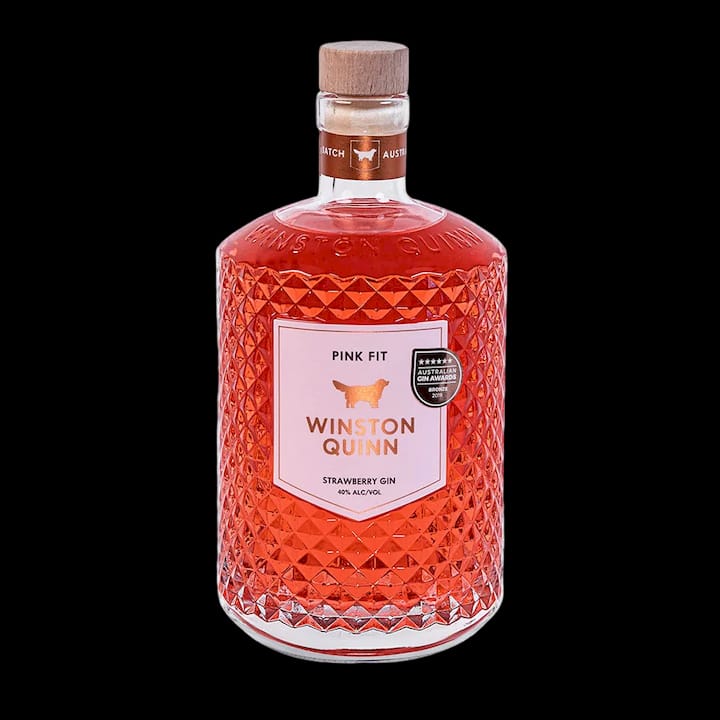
Winston Quinn is the alternative to guessing what’s really in your pink gin bottle. Every drop of Pink Fit Gin gets its colour from real fruit infusion, not an added dye, so what you taste is what actually went into the still.
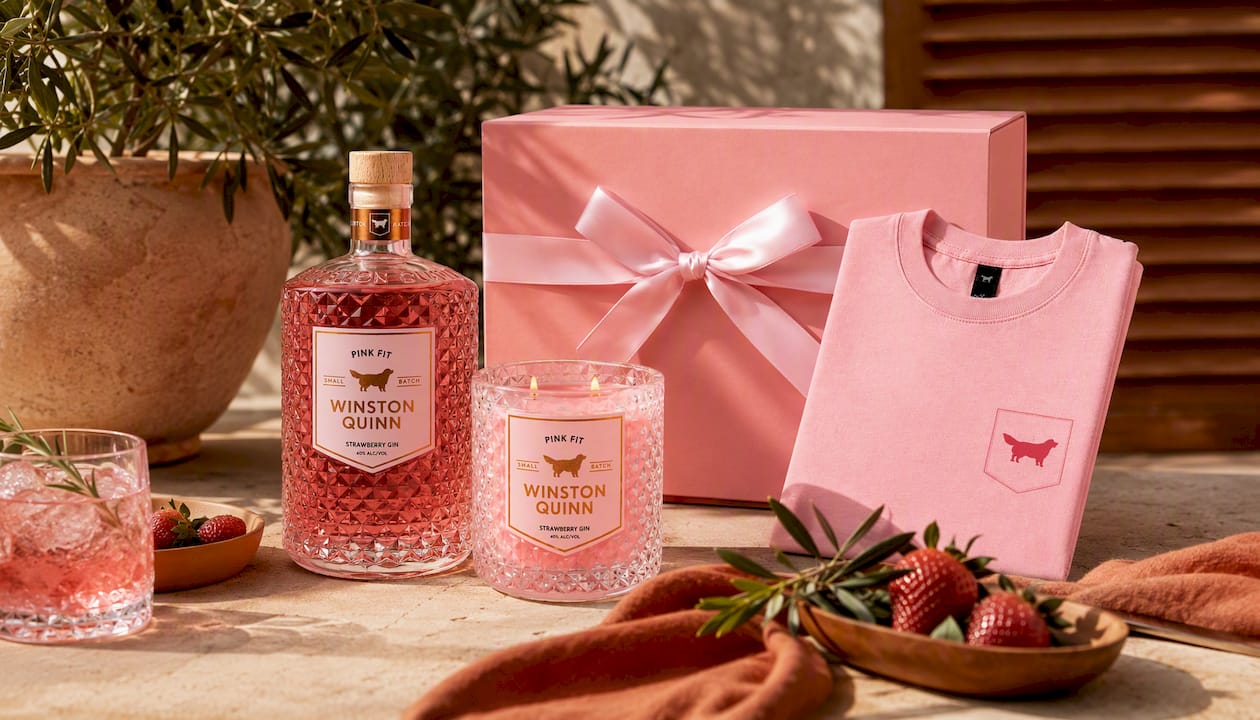
Pink Fit has a strawberry-forward profile suited for spritz, tonic, or neat serves, crafted with natural botanicals and colouring. If you’re shopping for a gift rather than just a bottle, the Pink Fit Bundle pairs the gin with matching extras, and the Pink Fit Strawberry Champagne Candle makes a fitting companion piece for the same fruity, celebratory mood. Browse the full gin range or check out The Denim Collection if you want to compare a juniper-led style alongside Pink Fit, pick up a mixer from our tonics selection, and grab a bottle while you’re there.
Sources
FAQ
What is the difference between gin and pink gin?
Regular gin is clear and led by juniper, while pink gin is either a gin and Angostura bitters cocktail with a rosy tint, or a modern spirit infused with red fruit for both colour and a sweeter taste. The two pink gin styles taste noticeably different from each other and from a standard London Dry gin.
What is the best pink gin to try if I want a natural, fruit forward option?
Look for a pink gin that lists real fruit infusion rather than added colouring on the label. Pink Fit Gin uses natural fruit infusion for its colour and flavour, making it a solid pick for drinkers who want genuine strawberry character rather than a dyed spirit.
What alcohol is in pink gin?
Pink gin is built on a base of ordinary distilled gin, typically sitting at standard gin strength before any dilution. The classic cocktail adds only a few dashes of Angostura bitters to that base, while modern pink spirits are already flavoured before bottling.
What fruit is pink gin made from?
Modern pink gins are commonly infused with strawberries, raspberries, rhubarb, or redcurrants, sometimes blended together. Producers steep these fruits with the base gin after distillation, a method Difford’s Guide documents as the standard production route across the category.
